


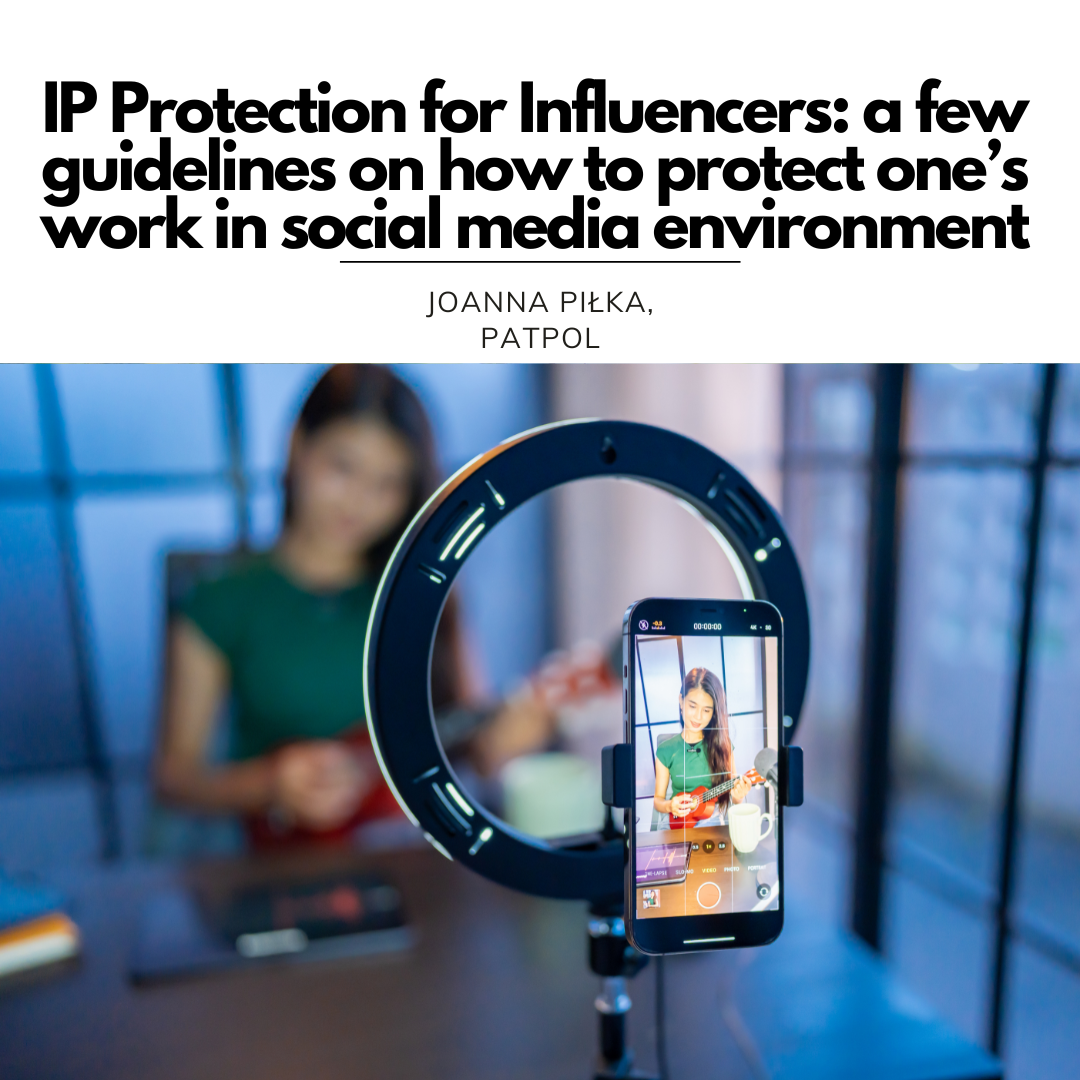
Influencers are known for creating unique contents across the internet every day, thus building their own brands. Why is protection of intellectual property (IP) so important from influencers’ perspective, and what risks may arise if one neglects to protect the content properly?
Influencers in the world of intellectual property – why is it so important to protect one’s works?
Influencers and online creators are among the most important content creators in the digital space today. The activities of influencers and online creators are extremely diverse and go beyond simply posting photos or videos. The foundation of their work is, above all, the creation of original content, including photographs, videos, graphics, animations, and text.
In practice, when creating such content, online creators often use the existing resources, such as background music in videos, brand logos, video clips, and increasingly – the content generated by artificial intelligence (AI). This opens new possibilities, but simultaneously brings challenges related to intellectual property rights, both in terms of protecting one’s own rights to the created content and legal use of the contents produced by others.
Furthermore, influencers’ activities include promotion of products and brands, which may be performed in various ways, such as testing and reviewing products, co-creating marketing content, transferring rights to materials created as a part of cooperation, and licensing the content in favor of brands.
However, the core of every influencer’s work is building their own personal brand. In the world surrounding the viewer with a variety of contents, it is the unique identity and recognizability that determine the success of an influencer. Thus, having a strong personal brand guarantees credibility and loyalty in the community of followers. What is most important, among many creators whose work is present in online media, personal branding allows to be distinguished and attracts the viewers’ attention.
Each of the above mentioned areas requires the awareness of principles of intellectual property protection, as the lack of the relevant knowledge may lead to damaging or losing one’s reputation, or infringement of one’s rights by others, or even legal liability for infringing someone else’s rights. Thus, building a personal brand is not just about the aesthetics of a profile on social media – it is also about a conscious IP protection strategy. Registering a name, logo, or distinctive visual elements gives an influencer an advantage over the others and ensures that the influencer’s work is well-protected.
What intellectual property rights should every influencer be aware of?
Influencers operate in the environment where sooner or later their creativity shall meet the issues relating to the law. Therefore, in order to have one’s content protected, but also be fair in relation to others, it is so important to be aware of basic types of intellectual property rights.
Copyright
It protects all original works – such as photographs, videos, texts, and music – from the moment they are created, without the need of registration. It gives the creator the right to decide how the work is used and to make benefits from it.
Trademarks
These are signs such as a name, logo, color, or sound that distinguish one company’s goods or services from those of others. They protect the brand and its identity on the market. They must be registered with the appropriate authority.
Industrial Designs
They protect the appearance of a product or its parts – shape, lines, color, ornamentation, and graphics. An industrial design must be new and have an individual character. It must be registered with the appropriate office. It grants the exclusive right to use the design for a specified period (usually 25 years).
Patents
Patents pertain to inventions – new technical solutions that possess an inventive step (are not obvious) and are suitable for industrial application. They require filing with the appropriate office. A patent grants the exclusive right to use the invention for a specified period (usually 20 years).
Utility Models
They protect practical technical solutions that are less innovative than inventions but are useful in products. In some countries, they are known as “small patents.” They require filing an application with the appropriate office. They grant the exclusive right to use the utility model for a specified period (usually 15 years).
Geographical Indications
They protect the names of products associated with a specific region, guaranteeing their origin and quality (e.g., “Champagne,” “Oscypek” [smoked cheese from the Polish highlands]). Starting December 1, 2025, the protection will extend not only to agri-food products but also to craftsmanship and industrial products, such as natural stones, wood products, jewelry, textiles, lace, cutlery, glass, porcelain, and leather.
Examples of Intellectual Property (IP) used in Influencers’ Activities
| Fashion | Beauty | Gaming |
Food & Cuisine |
|
|
Copyright |
Styling photos, catwalk show videos | Makeup tutorials, product photos | Streams, gameplay recordings, graphics | Recipes, food photos, cooking videos |
|
Trademarks |
Clothing brand name, collection logo | Beauty channel logo, cosmetics line name | Gaming channel name, team logo | Food blog name, brand logo |
| Industrial designs | Clothing appearance designs, fabric patterns | Cosmetics packaging design | Appearance of gaming gadgets |
Design of kitchenware, product packaging |
| Patents | Innovative materials in clothing | New makeup application devices | Gaming equipment with a unique function |
Kitchen appliances with new technology |
|
Utility models |
Functional clothing accessories |
Cosmetics organizer | Improved controller holders |
Practical kitchen accessories |
| Geographical indications | Regional jewelry, traditional laces | Natural cosmetics from a specific region | Handmade accessories made from local materials |
Cheese protected under a designation of origin, local wine |
Intellectual Property as an asset and a risk
Intellectual property rights not only provide protection for creative content and materials but also constitute a tangible business asset. Registered intellectual property rights (e.g., trademarks, industrial designs) can be licensed, sold, and even used as financial security. Intellectual property allows creators to benefit from their work and protect themselves against copying.
Intellectual property rights are tools that protect influencers’ creativity while also protecting the rights of other market participants. That is why respecting others’ intellectual property is just as important as protecting one’s own content. The lack of awareness of the rules regarding copyrights, trademarks, or industrial designs can lead to serious consequences, ranging from reputational damage and sanctions imposed by platform providers, to legal liability. Respecting intellectual property is not only a matter of legality but also of building trust with the audience and business partners.
Influencers must be aware of the risks associated with using protected intellectual property. Infringing intellectual property rights damages one’s reputation, undermines authenticity, and can lead to the termination of partnerships with brands, as well as result in costly legal proceedings. Additionally, it may result in sanctions from platforms, such as content removal or demonetization.
Influencers are an attractive target for sellers of counterfeit goods. Why? Because they are trusted voices, which sellers of counterfeit goods are eager to exploit to give credibility to illegal products. Meanwhile, an influencer’s promotion of counterfeit goods constitutes an infringement of intellectual property rights and may result in liability for damages.
How can influencers ensure compliance with industrial property rights?
In order to operate in accordance with the law, influencers should ensure that all content they use – from music to logos and designs – is legal, and obtain the appropriate permission when using third-party’s trademarks. It is also important to monitor the market to protect their own trademarks and industrial designs and to avoid promoting counterfeit goods that may infringe intellectual property rights.
What is more, when cooperating with brands, it is important to clearly define the rights to the content in the appropriate contracts, and, in case of doubts, consult a counsel specializing in intellectual property.
Summary
Intellectual property is a key element of influencers’ work. It offers opportunities for growth by protecting creative content. However, it requires an understanding of the possibilities, benefits, and risks, as well as constant legal sensitivity.

Joanna Piłka is a patent attorney in the department of trademarks and industrial designs. She deals with issues related to the protection of trademarks, industrial designs and internet domains. Also develops a strategy and provides advice on brand protection and industrial designs, prepares legal opinions. She is a member of INTA and ECTA (member of the Design Committee of ECTA). Contact with the author