


Source: https://www.wasabisushi.pl/wszystko-co-musisz-wiedziec-o-sake/
What is sake?
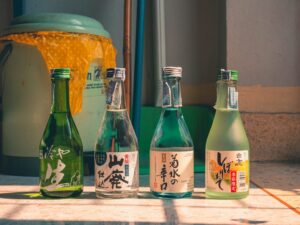
Sake (from Japanese日本酒, nihon-shu or a Japanese liquor) is a traditional Japanese alcoholic beverage made from rice.
Sake is light in color, sweet in taste, non-carbonated, and contains between 14 and 16% alcohol, which is why it is often mistakenly referred to as wine.
It is produced through multiple fermentations of rice, in which the rice grain is converted from starch to sugar and then to alcohol. During the fermentation process, a mold called koji is added to the rice.
In Japanese, the word sake (酒) may refer to various alcoholic beverages: the local original ones, but also beer, whiskey, or wine.
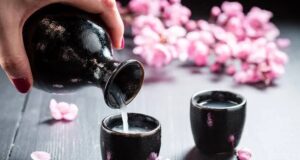
Sake may be served cold, but also hot, especially in the north of Japan.
Source: https://zywienie.medonet.pl/produkty-spozywcze/napoje/sake-powstawanie-rodzaje-wlasciwosci/0m87nhn
The history of sake
When seeking the origins of the history of sake, one must go back in time approximately 2,500 years, when rice became one of the dominant crops in Japan. Written sources mentioning rice alcohol date back to the 3rd century AD and indicate that the Japanese would gather around sake to remember and mourn the souls of the deceased. Sake was mainly consumed at the ceasar’s court and used during official ceremonies.
The technology associated with sake production developed most significantly between the 12th and 15th centuries, when Buddhist and Shinto monks became involved in it.
Japanese warriors often drank sake, which is why it is commonly referred to as the drink of the samurai. The beverage became so popular that by the beginning of the 18th century, its annual production had reached 38,000 liters. This means that during the Edo period, an average Japanese citizen drank an average amount of 54 liters of sake per year.
When the Western world began to take interest in Japan in mid-19th century, sake became the subject of much research and scientific analysis. In their reports, European researchers pointed out, among other things, a remarkable fact that the Japanese had been using pasteurization as the method of preserving food for centuries, which was not known in Europe until the 1860s when it was developed by the French chemist Louis Pasteur.
Production technology, uses and quality of sake
Sake production technology has evolved along with the developments in science and industry, and was also affected by socio-cultural changes. At the beginning of the 20th century, the first institutions responsible for quality control of the rice spirit began to emerge, and in 1911, the first competition for sake producers was held.
Sake is often used in cooking because it improves the flavor and also reduces the smell of meat and seafood. It is also used as a seasoning for soups, sauces, and cooked dishes, and the Japanese mix it with egg and drink it as a remedy for colds.
For most of their history, the Japanese did not attach much importance to the quality of sake, the variety of rice, or where it was grown. The factor that influenced the evaluation of sake was not the place where it was produced, nor was it a particular type of rice, but the chief brewer, known as “Toji,” and the technology he used. For sake consumers, the brand was not important, but what mattered was drinking it Hiya (cold) or Kan (hot).
Sake as Geographical indication
In 2005, the National Tax Agency of Japan approved the first geographical indication for sake – Hakusan sake in the Prefecture of Ishikawa. The currently binding law on geographical indications was passed in Japan in 2015. Subsequently, geographical indications are registered by the Ministry of Agriculture, Forestry and Fisheries, and not the Japanese Patent Office.
However, in the case of alcoholic beverages, namely sake, geographical indications are granted by the Commissioner of the National Tax Agency. It was this agency that defined “Japanese alcohol” and created the standard for its production. In the case of sake, this means that it must be brewed in Japan, from rice grown in Japan, and water originating also from Japan.
Source: https://pl.wikipedia.org/wiki/Sake
Protection of sake
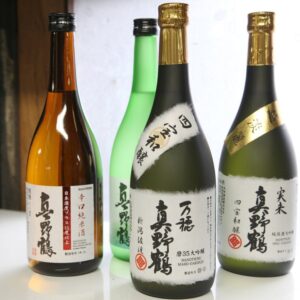
The products that do not meet the standards for sake production cannot be labeled as if these norms were fulfilled, nor as nihon-shu or日本酒, but may simply be labeled as sake or seishu. These two names are considered customary and, as such, cannot be the subject of exclusive rights.
By 2022, the Commissioner of the National Tax Agency granted the right to use the geographical indication nihon-shu or 日本酒 for 13 regions where sake is produced.
Sake is also produced outside Japan, which is why the Japanese government has concluded bilateral agreements with many countries under which (on a reciprocal basis) the names of certain alcoholic beverages are protected, for example with the US in 2019.
In the European Union nihon-shu or 日本酒 , that is the Japanese sake, is protected under the Economic Partnership Agreement, which has been in force since 2019. In the United Kingdom and Northern Ireland, sake is protected under the Comprehensive Economic Partnership Agreement, which came into force in 2021.
Sake on the List of UNESCO of Intangible Cultural Heritage
In February 2022, the Japanese Council for Cultural Affairs decided to nominate traditional Japanese techniques for brewing alcohol, including sake, using koji mold as a candidate for the UNESCO Intangible Cultural Heritage List, and in 2024, the traditional techniques for brewing alcohol, including sake, were successfully inscribed on the aforementioned List.
Japan’s ambassador to UNESCO, Mr. Kano Takehiro, stated that “UNESCO’s decision is a tribute to the knowledge and craftsmanship associated with sake production, which has a long tradition dating almost a millennium back in the past.” Consequently, Japan hopes that adding sake to the UNESCO list will help to “promote this liquor among younger generation of consumers and restore the image of sake as the main alcoholic beverage in Japan,” and also to increase the exports of this spirit abroad.
So, Happy New Year! Or あけましておめでとうございます!*
* In Japan, the New Year’s greetings are expressed by saying „あけましておめでとうございます” (Akemashite omedetō gozaimasu). This simply means „A Happy New Year”. The Japanese traditional way of celebrating the New Year is with evening prayers at temples and a special meal called osechi-ryōri. [1]
[1] New Year’s Greetings in many languages, Translation: Express24.pl, www.tlumaczenia-express24.pl/blog/zyczenia-noworoczne-w-roznych-jezykach (date of search: 28.11.2025).

Agnieszka Skrzypczak is a patent attorney specializing in trademarks and industrial designs. In 2002, she obtained the rights of a Polish Patent Attorney, and since 2004, she is also a European Patent Attorney. She is a member of INTA (International Trade Marks Association) and PIRP (Polish Chamber of Patent Attorneys). Contact with the author