


What is tequila? A brief history and production process
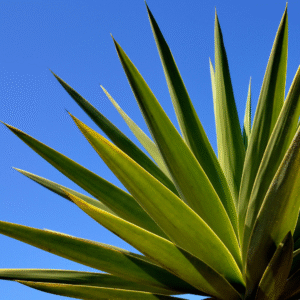
Tequila is a distilled spirit made from blue agave (agave azul), which looks like a cactus but is a succulent plant originating from Mexico.
The alcohol is distilled from fermented must, which is from the heart of the plant (piñas), similar to a giant pineapple, called “mezcal.”
Protected geographical indication and international protection of tequila
Currently, tequila can be legally produced in only five Mexican states: Jalisco, part of Guanajuato, Tamaulipas, Michoacan and Nayarit.
Premium tequilas are made from 100% blue agave, while lower-end tequilas (mixtos) contain a minimum of 51% blue agave distillate, with the remainder consisting of other distillates, usually made from other varieties of agave, molasses, or corn.
Original tequila has a strong, sharp and crisp taste. It can be compared to pure vodka, but it is an alcohol produced from agave, so it has completely different aromatic flavors. The longer tequila is aged, the stronger and more distinct its aroma becomes. Some say that tequila is the taste of Mexico – it has something unpredictable in it, a Latin temperament, but also a certain roughness. This is one of the reasons why a whole routine of drinking tequila was created, which is now known and practiced all over the world.
The first attempts to organize and regulate tequila production took place at the beginning of the 20th century, but it was not until 1944 that the Mexican government decided that any product called tequila must be produced by distilling agave in the state of Jalisco, where the city of Tequila is located.
The first standards for tequila were established in 1947, and the first international legal act granting it protection was the Lisbon Agreement, signed by Mexico in 1958.
In 1976 (when some other countries such as Japan and Spain began to produce alcoholic beverages branded as tequila), the Mexican government amended the Law on Inventions and Trademarks, which also regulated designations of origin, and issued the General Declaration on the Protection of the Designation of Origin “Tequila.”
In 2012, a specification was issued and tequila was defined as: “a regional alcoholic beverage distilled from must, directly and originally prepared from the material extracted on the premises of an Authorized Producer, which must be located in the territory specified in the General Declaration of Protection of the Designation of Origin ‘Tequila’ .”
The international protection of the origin of tequila dates back to 1978, when it was registered with WIPO.
Tequila is also protected in the whole European Union under the Agreement on the mutual recognition and protection of the spirits designations signed by Mexico and the EU in 1997.
In 2019, the designation “tequila” was registered as a geographical indication in the EU, becoming the third alcohol product from a third country to be added to the register (after pisco and rum).
The first spirit made from 100% blue agave grown outside Mexico was “Temequila,” produced by JB Wagoner, a distiller from Temecula, South Carolina. It met with a refusal to register the name by the US Patent Office. The Office ruled that the name Temequila was too similar to Tequila, a protected designation of origin.
In 2018, Elon Musk joked that Tesla had gone bankrupt, forcing him to drink “Teslaquila.” Elon Musk applied to register the trademark ‘teslaquila’ for “distilled blue agave liquor” in Jamaica, and later in the US, Mexico, and the EU. An opposition was immediately filed, and in March 2019, the Mexican Institute of Industrial Property ruled that “teslaquila” could not be registered as a trademark because it was too similar to the protected designation of origin, tequila.
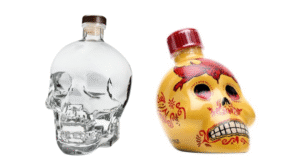
There were also a number of interesting disputes concerning the distinctive bottles in which tequila was sold. One of the disputes was initiated by the company Globefill, owned by a well-known Canadian actor Dan Aykroyd, which produced spirits, including tequila, in glass bottles imitating skulls.
The defendant was the company KAH Tequila, which sold tequila in ceramic “calavera” bottles (which means ‘skull’ in Spanish) and argued that its product refers to the history of Mexico, the Black Death, and the “Dia de Los Muertos,” and not vodka.
The California Court did not agree with the defendant’s explanations, especially that the Crystal Head Vodka skull bottle had been registered in the US Patent Office as an unconventional trademark for product packaging.
Tequila as the cultural heritage of Mexico
Tequila is a part of Mexico’s cultural heritage. It is gaining popularity and replacing other spirits on the markets, including whiskey. Thanks to the quick and effective response of the Mexican government, which took steps to protect the name and the production process of the spirit within the country, its success is the success for Mexicans and the source of living for over 70,000 families involved in tequila production, with over 20,000 farmers.
As for the presence of worms in tequila bottles, real tequila never contains any worms – this is a prohibited practice, although it cannot be ruled out that some mezcals produced outside Jalisco, in the parts of Guanajuanto, Tamaulipas, Michoacan, and Nayarit, may contain the larvae of the agave worms or agave moth.

Agnieszka Skrzypczak is a patent attorney specializing in trademarks and industrial designs. In 2002, she obtained the rights of a Polish Patent Attorney, and since 2004, she is also a European Patent Attorney. She is a member of INTA (International Trade Marks Association) and PIRP (Polish Chamber of Patent Attorneys). Contact with the author